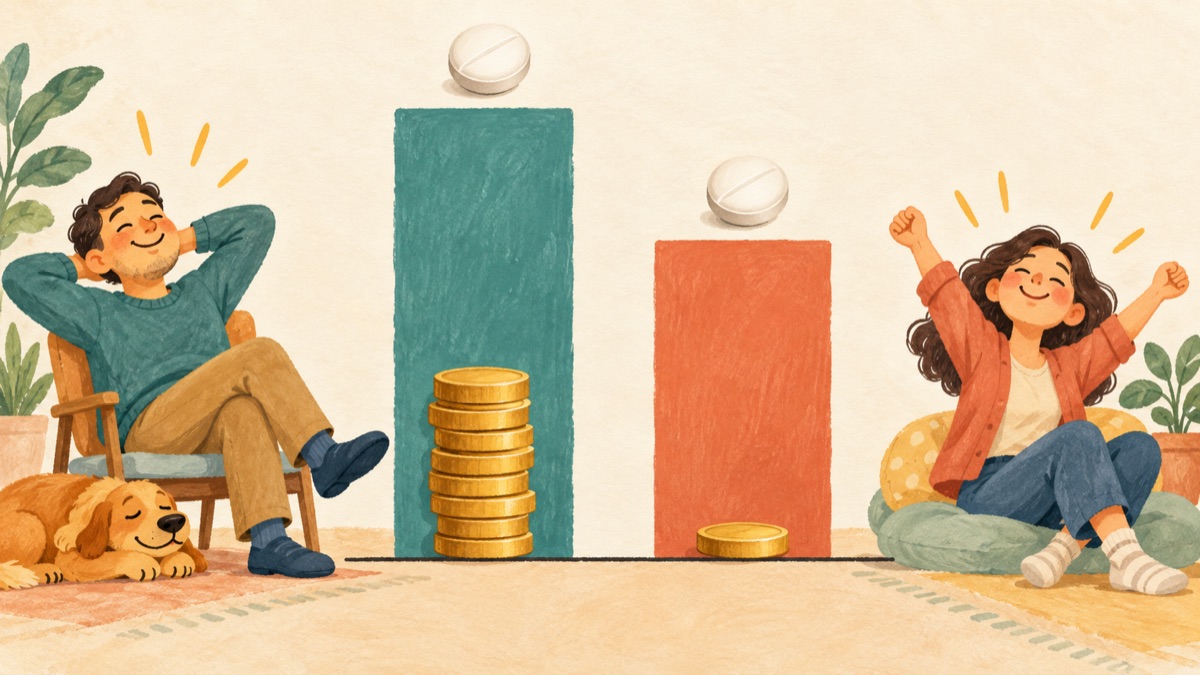
The Fake Pill That Worked Better When It Cost More
Kids see prices, brands and labels everywhere, and this experiment shows those signals can change what we actually feel. It's a fun way to talk about how our brains predict, not just receive, experiences.
- • The 2008 study was by Rebecca Waber and Dan Ariely of MIT, Baba Shiv of Stanford and Ziv Carmon of INSEAD. The same researchers found people who paid full price for an energy drink solved more word puzzles than people who got it at a discount, and in another study wine drinkers' brain pleasure centres responded more to wine they believed was expensive, though the wines were identical.
- • A small 2015 study of 12 people with Parkinson's disease found salt-water injections labelled 'expensive' helped movement more than the same salt water labelled 'cheap', when the expensive one came first.
- • Placebo effects are strongest for things people feel and report: a review of trials across 40 conditions found a clear effect mainly for pain. Placebos don't cure diseases, and a skeptical scientist asked for bigger repeats of the 2008 study.
Would a fake pill work better if it cost more? Your gut says no. Your brain says maybe.
In 2008, researchers from MIT, Stanford and INSEAD gave 82 adults small electric shocks on the wrist. Then each took a new painkiller. Except it wasn't. It was a placebo: a pill with no medicine in it. Half were told it cost US$2.50 a pill. Half were told it had been discounted to 10 cents.
The result? About 85% of the pricey-pill group said their pain went down. In the cheap-pill group, only about 61% did. Identical pills. That's about 24 extra people out of every 100, helped by a price tag.
How? Step one: we all carry a belief that cheap things are worse. Step two: that belief turns into a specific expectation: this pill won't work as well. Step three: expectations change what you feel. Expecting relief seems to make the brain release its own natural painkillers, called endorphins. So the relief can be partly real.
It goes beyond pills. People who paid full price for an energy drink solved more word puzzles than people who got a discount.
But don't swap your medicine for sweets. Placebos work mainly on things you feel, like pain. They don't cure diseases. And this was one small study in healthy adults.