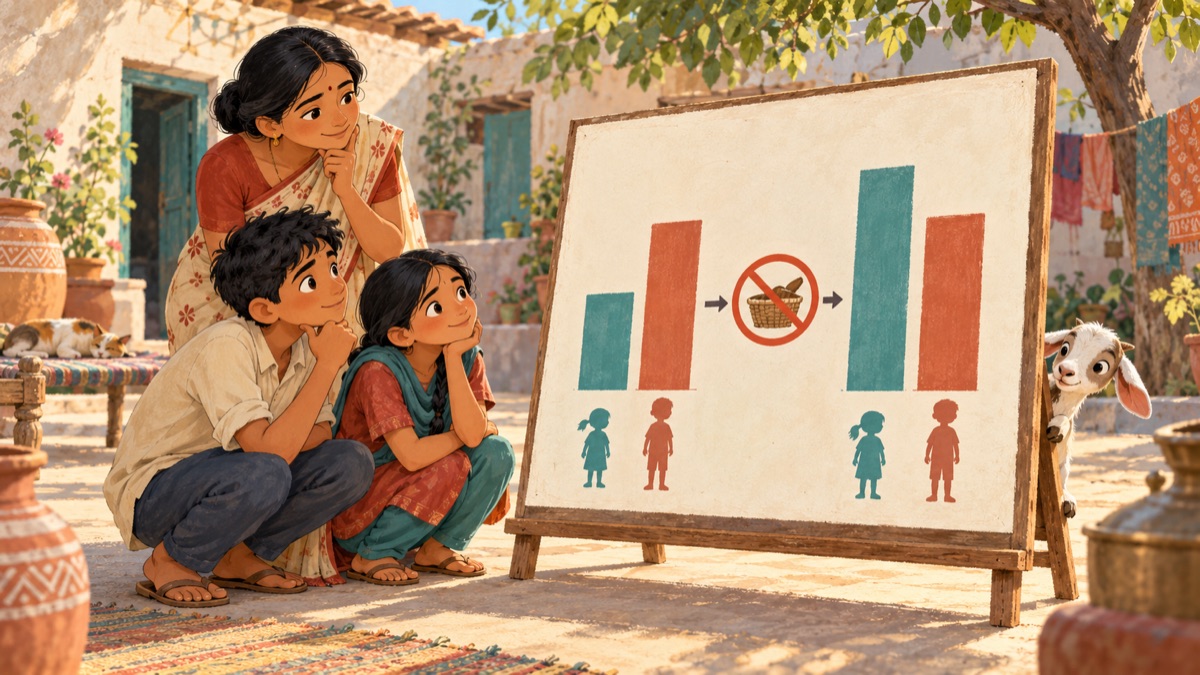
When a Ban Made It Worse
A careful study of India's 1986 child labour ban found that child wages fell and child labour rose afterwards. It is a powerful, real example of how a rule with good intentions can hurt the people it was meant to protect, and why the fix is rarely just 'ban it' or 'allow it'.
- • Enforcement was weak but employers knew about the law: from 1990 to 1993 national inspectors found 1,203 violations and launched only seven prosecutions.
- • The researchers (Bharadwaj, Lakdawala and Li) stress they are not saying all bans are useless: well-designed, enforced bans, for example with fines high enough that employers really stop hiring children, could help.
- • ILO and UNICEF estimate nearly 138 million children were in child labour in 2024, almost half the 246 million of 2000; they back laws together with child benefits, free quality schooling and decent work for adults.
If it gets heated: If a kid says 'just ban it, it's cruel', agree that protecting children is the goal everyone in the story shares, then ask what the poorest family should do next week if their income drops. If a kid says 'let kids work then', agree that the family's survival is real, then ask what that child loses by missing school. The aim is to understand why caring people land in different places, not to pick a winner.
Can a law against something bad end up creating more of it?
India, 1986. A new law banned under-14s from jobs like mines, ports, construction and garment making. Farms and family businesses were left out. Employers caught faced prison or a fine.
Obvious win? Economists compared surveys from before and after. Child wages fell, by roughly 4 to 10 percent. And child labour went up, by about an eighth.
Follow the chain.
Step one: a child worker now carries a risk of a fine, so the employer takes that risk out of the child's pay.
Step two: the poorest families send children to work only to reach the bare minimum to live on. When each child earns less, the family falls short.
Step three: so another child goes to work, often on farms, which the ban did not cover. For those families, more work meant almost exactly that much less school.
Now the fair part. One side says children belong in school, not work, and the answer is a better ban with real enforcement, plus child benefits, free schools and decent jobs for parents. The other side says that for a very poor family, a child's wage can be a lifeline, and a ban without help just leaves that family poorer.
Both sides want the same child to be okay.