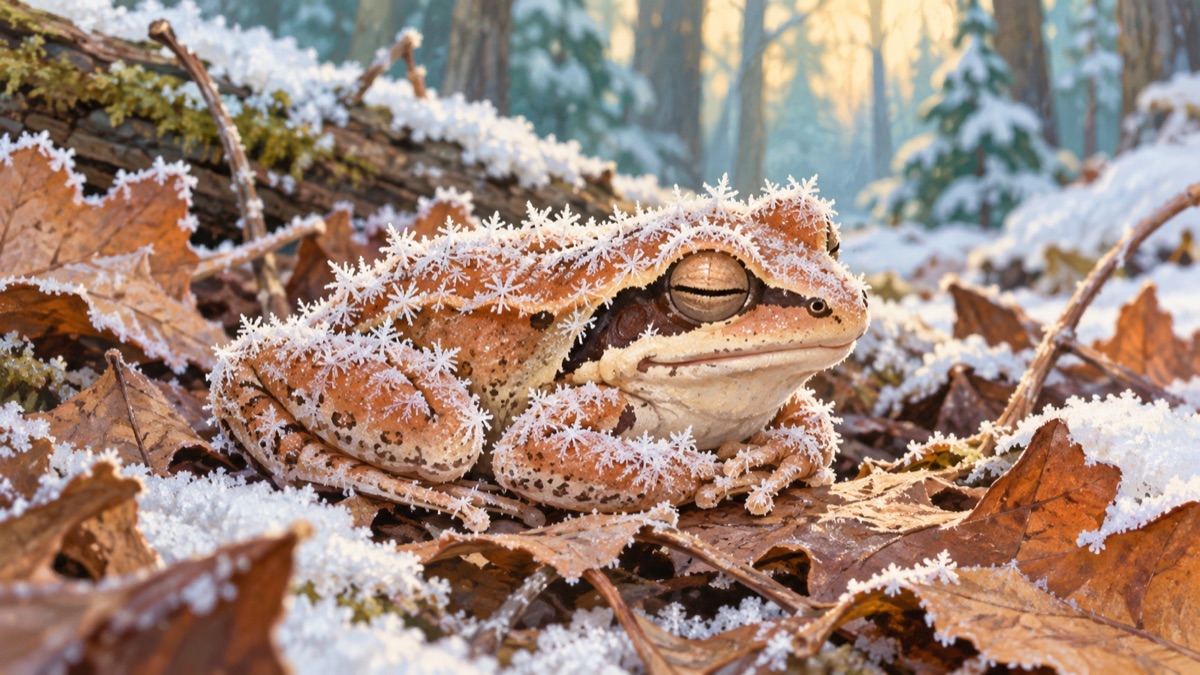
The Frog That Freezes Solid
It is a real-life magic trick with a simple, explainable mechanism, and it links a tiny frog to a big hospital problem.
- • The wood frog is the only amphibian that lives north of the Arctic Circle.
- • Alaskan wood frogs freeze and thaw about 10 to 15 times in autumn before freezing for the season, which may build up as much as 10 times their normal sugar level.
- • The heart and liver freeze last and thaw first, keeping the most important organs going for as long as possible.
Ever eaten a strawberry that was frozen and then thawed? It goes soft and mushy. Why?
A strawberry is made of tiny bags called cells, full of water. When water freezes, it turns into sharp ice crystals. The crystals stab the bags and burst them. Thaw it, and the burst bags leak. Mush.
Now meet the wood frog of Alaska and Canada. It is tiny, at most about 7 centimetres long. Every winter it freezes. Up to about 60 percent of its body turns to ice. Its heart stops. It stops breathing. For up to 7 months!
Then spring comes. It thaws, its heart starts again, and it hops off to a pond to call loudly for a mate.
So why no mush? Here's the trick.
One: the first touch of ice sends a message to the frog's liver.
Two: the liver turns its stored energy into sugar and floods the body with it.
Three: water gets pushed out of the cells, and sugar takes its place. Sugar works like antifreeze.
So ice forms only in the gaps between the cells, never inside them. No stabbing. No bursting.
Doctors are now studying this frog. Organs donated to sick people last only a few hours outside the body. A frog-style freeze could make them last much longer.