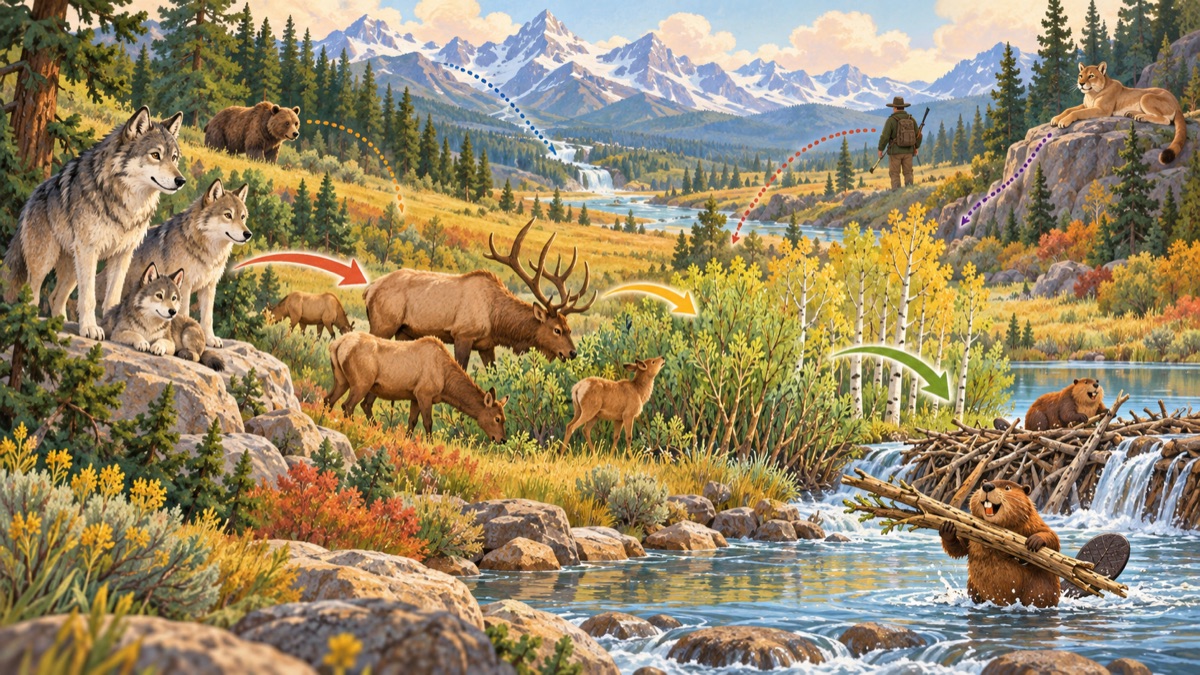
Did the Wolves Really Do It?
The 'wolves healed Yellowstone' tale is one of the most shared nature stories around, and the real science is a perfect lesson in why one neat cause is rarely the whole story.
- • Without wolves, scientists visiting in 1929 and 1933 called the range 'deplorable', and rangers trapped, moved and even shot elk for more than 30 years to protect the plants.
- • Willows and aspens grew taller in patches that already existed, but did not spread into new areas, which is one reason scientists doubt the 'park healed' version.
- • Scientists writing for the park service summed up the debate: 'we've made progress, but we're not there yet.'
If trees grow back right after wolves return, did the wolves do it?
Yellowstone, a park in the USA, lost its last wolves to hunting by 1926. With no wolves, elk multiplied and chewed young aspen and willow trees down to stubs. Rangers even shot elk for more than 30 years to save the plants.
In 1995 and 1996, people brought in 31 wolves from Canada. Each wolf now kills about 22 elk a year, nearly double the 12 planners guessed. Elk numbers fell.
Then came the famous story, in three steps. Wolves eat and scare elk. Elk munch fewer young trees. Willows shoot up, and beavers, which need willow, come back: from 1 colony in 2001 to 9 in 2011. Wolves healed the park!
Lovely. Slow down, say the scientists.
At the same time, cougars and bears increased, people hunted elk outside the park, and streams changed. And in dry spots with fewer elk, willows didn't grow at all.
Surprise: tracking collars show elk avoid risky spots only when wolves are actually active. Elk check the wolf timetable.
And there is only one Yellowstone. You can't run it twice, once with wolves and once without.
So scientists still publish dueling papers. Nobody serious says wolves did nothing. But 'wolves fixed everything' goes beyond the evidence.