The Two-Thirds Game: Too Clever to Win
It is a five-minute game that teaches a big idea: winning often depends on predicting how other people think, not on being the most logical. Economists still use it to measure how many steps ahead people really reason.
- • When the Financial Times ran this game in 1997 with about 1,500 readers, the average guess was about 19, so the winning number was 13; readers who picked 0 or 1 lost.
- • In lab versions played four rounds in a row, guesses fall toward 0 as players learn from each round, so your second round should come out lower than your first.
- • It is called a 'beauty contest' game after John Maynard Keynes, who in 1936 compared the stock market to a newspaper contest where you win by picking the face other people will pick.
Is it smart to be the most logical person in the room?
You need: paper and a pen each. About five minutes.
Rules: 1. Everyone secretly writes a whole number from 0 to 100. 2. The winner is whoever is closest to two-thirds of the family's average. 3. Reveal together. Add the numbers, divide by the number of players, then take two-thirds of that. 4. Play a second round straight away.
THE REVEAL. Climb the logic ladder. If people pick at random, the average is about 50, so you pick 33. But if everyone thinks that, the target drops to 22. Then about 15. Then about 10. Keep climbing and you hit 0. Classic game theory says perfect players all pick 0.
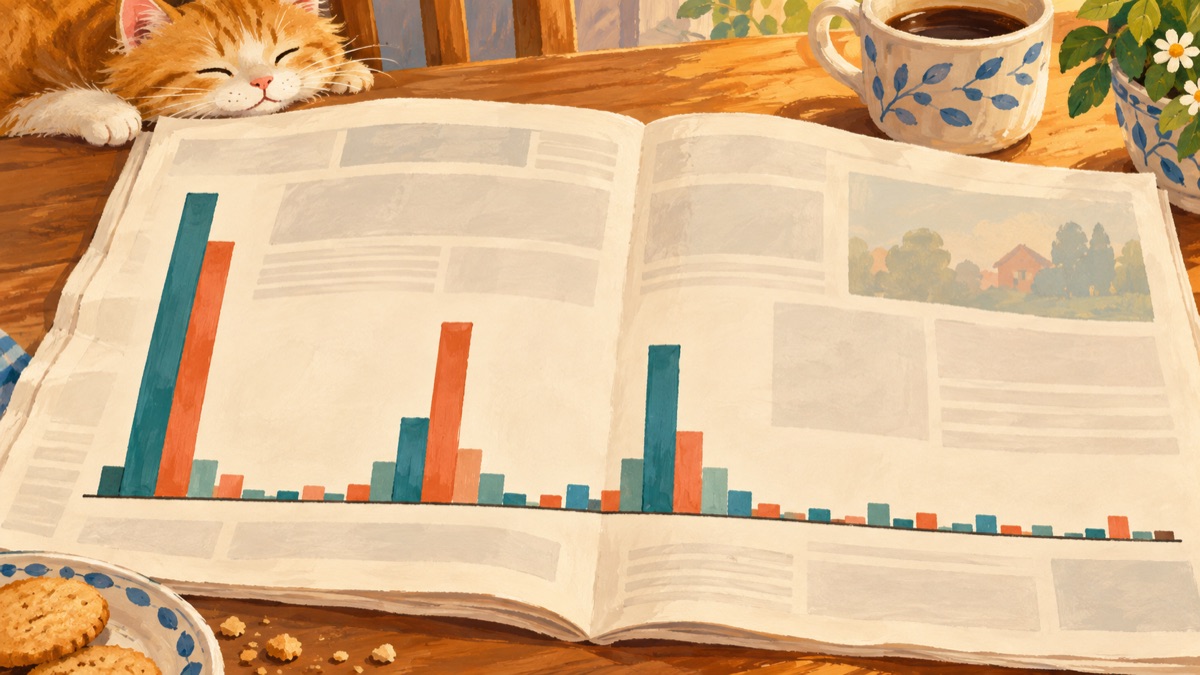
In 1997, newspapers in the UK, Spain and Germany ran this game with about 7,900 readers. The most popular picks? About 33, about 22, and 0 or 1. Most people stopped after one or two steps.
Now the twist. In the Financial Times contest, the average was about 19, so the winning number was 13. The people who picked 0 had the logic right. They had people wrong. They assumed everyone else was as logical as them.
So winning isn't about being the cleverest. It's about guessing exactly how clever everyone else is. Did your second round drop? In lab versions played over four rounds, guesses slide toward 0 as people learn.
It's named after economist John Maynard Keynes, who said the stock market is like a beauty contest: you win by picking the face others will pick.