The Sugar Pill That Told the Truth
It flips a 'fact' most adults believe: that a placebo only works if you are fooled. It also hands kids a sharp tool for life: the gap between feeling better and being better.
- • A bigger 2021 follow-up with 262 adults found honest placebos worked about as well as hidden ones: roughly 70% improved in each placebo group, but so did 54% of people who got no pills at all.
- • The 59% relief rate in the 2010 study was similar to the relief rate of a real IBS drug in other trials.
- • The researchers called the 2010 study a small, short 'proof-of-principle' pilot. Placebos are studied for symptoms people feel, like pain, not for curing infections or shrinking tumours.
Would a sugar pill still work if the doctor told you it was a sugar pill? Guess now.
For decades, doctors said no. A placebo, a pill with no medicine inside, only worked if you were fooled. Tell the truth and the trick dies. Right?
So a team at Harvard tried the cheekiest experiment in medicine. They took 80 adults with IBS, a painful gut problem with no simple cure. Half got nothing. Half got a bottle of pills and the plain truth: sugar pills, nothing in them.
Here is the clever part. Step one: both groups got the same warm, friendly time with the doctors. Step two: the pill group heard that placebos had helped others, and took them twice a day like real medicine. So the only difference was the bottle.
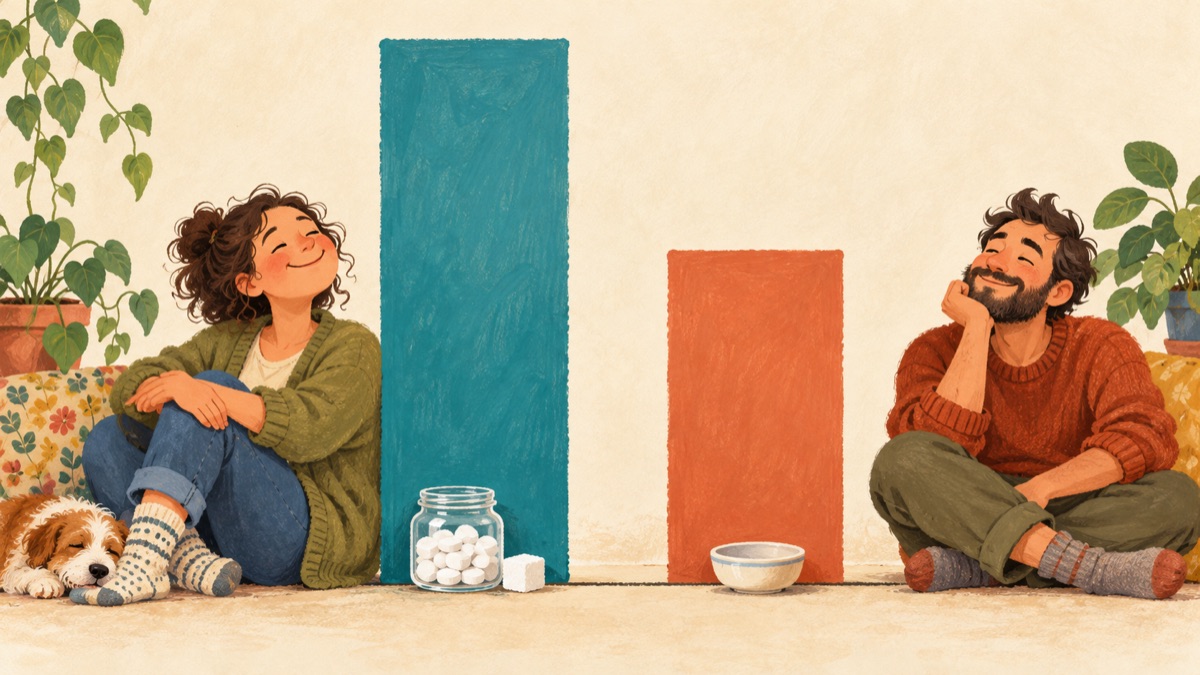
After 3 weeks, about 6 in 10 of the sugar-pill group said they had real relief. In the no-pill group? About 1 in 3.
Magic? Not so fast. The researchers spotted the catch themselves. Everyone knew which group they were in, so some may have said they felt better just to please the doctors. And no sugar pill shrinks a tumour.
So here is the puzzle for your table. Did they get better, or did they just say so?